


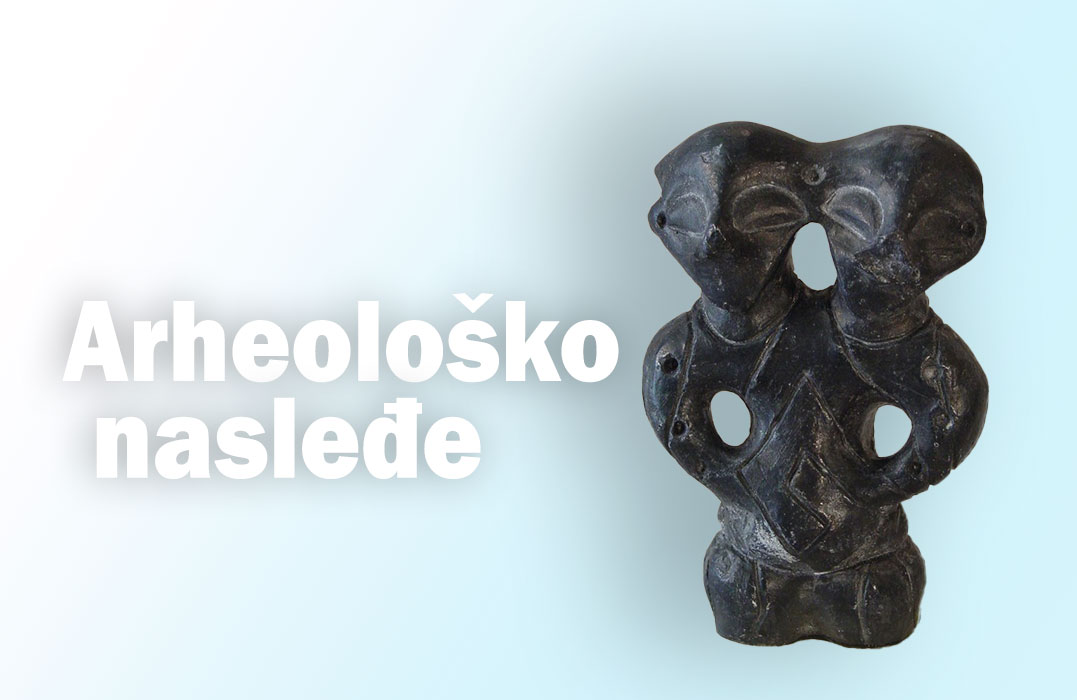
GOMOLAVA
Gomolava is a world-famous archaeological site on the outskirts of Hrtkovci on the left bank of the Sava River, which, with its wealth of diverse finds, through several different archaeological layers, testifies to the life of people in this area since prehistoric times. At the end of the 19th century, the first archaeological material was collected in this area, and in 1904, the first professional excavations were carried out.
Due to its good geographical position and connections with other regions, Gomolava was an important center for the Danube Region, the Carpathian Basin and Southeastern Europe for several thousand years.
At Gomolava, a large Roman necropolis was discovered. Roman residence in this area is also evidenced by rustic villas. The largest part of the archaeological material found is in the Vojvodina Museum in Novi Sad, and a smaller part is exhibited in the Local Museum in Ruma.
Despite the fact that Gomolava is under the protection of the state as an archaeological site of exceptional importance, threatened by the Sava river that washes it, Gomolava is a “disappearing city”.